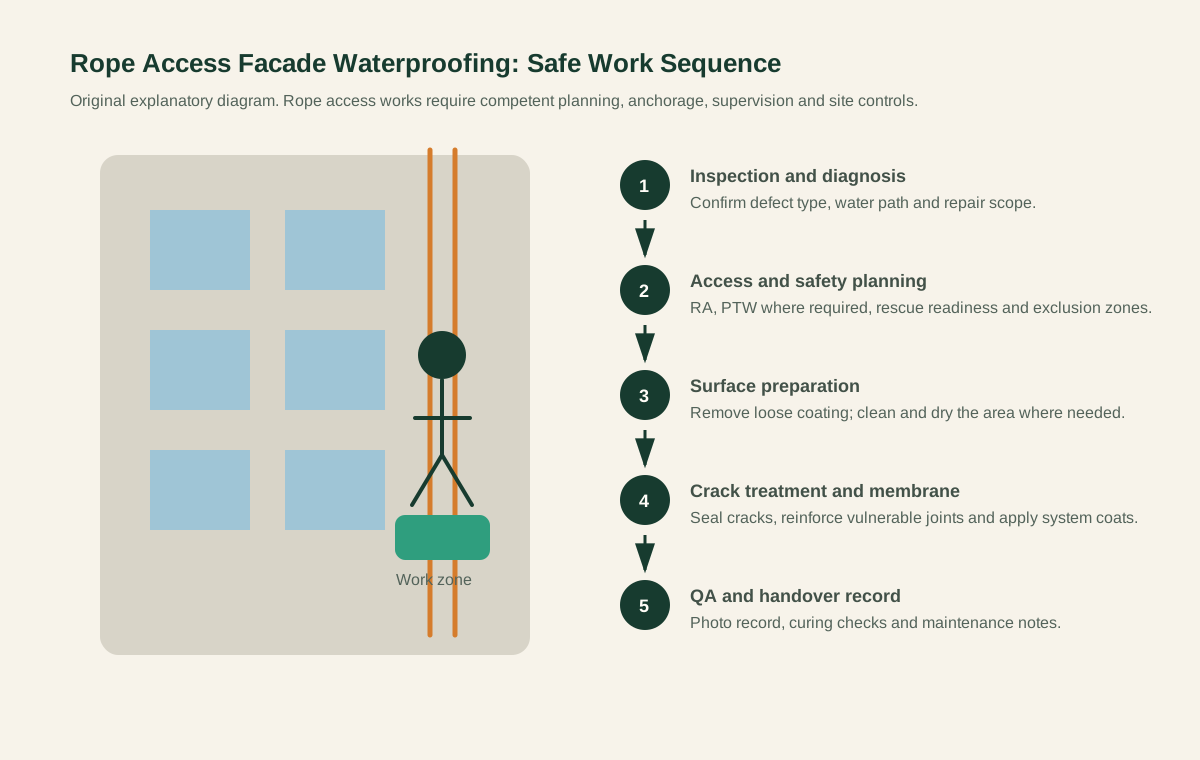
Rope access is one method of working at height. It is not always the right method. On a long facade with good ground access, a gondola or boomlift is often faster and cheaper. Rope access wins where the building geometry is awkward, where ground space is occupied, or where the work front is short relative to the mobilisation cost of suspended scaffold.
When rope access fits the brief
- Tight ground access, no setdown for a boomlift outrigger
- Short, localised work fronts — sealant joint replacement, spot crack repair
- Architectural features that block a gondola travel path
- Live retail or carpark below the facade where exclusion zones must be small
- Heritage buildings where load on a parapet would be a concern
Regulatory framework
Rope access work at height in Singapore sits under the WSH Council Code of Practice for Working Safely at Heights and the MOM WAH amendment factsheet. Documents on the building side: site risk assessment, method statement, fall prevention plan, anchor design check and rescue plan. For more on rope access selection and safety planning, see workatheight.sg and rope-access-singapore.com.
Anchor planning
Anchor location and load capacity is the first technical decision. Permanent eye anchors, structural columns or installed rope-access systems all behave differently under combined dynamic load. Anchor selection is reviewed against the rope team plan — main rope and backup rope, both anchored independently. A single shared anchor is not acceptable.
Exclusion zone and ground protection
Material drops, sealant runs, paint splatter and tool drop all need an exclusion zone below the work area. On occupied buildings, exclusion zones are timed and signed, with ground-level marshalling where pedestrian routes pass underneath. Hoarding, ground sheeting and drop catchers reinforce the exclusion.
Material application by rope
Elastomeric coatings can be roller-applied or spray-applied by rope. Spray gives higher production rate but a larger overspray cone; roller is slower but cleaner around occupied windows and sensitive features. The method is matched to the substrate, the wind exposure and the surroundings.
Rescue planning
A rescue plan is part of every rope access job — not a separate document filed after the event. The plan names the rescuer, the route, the equipment and the maximum time from incident to recovery position. Rescue capability is tested on the building, not on a training tower.