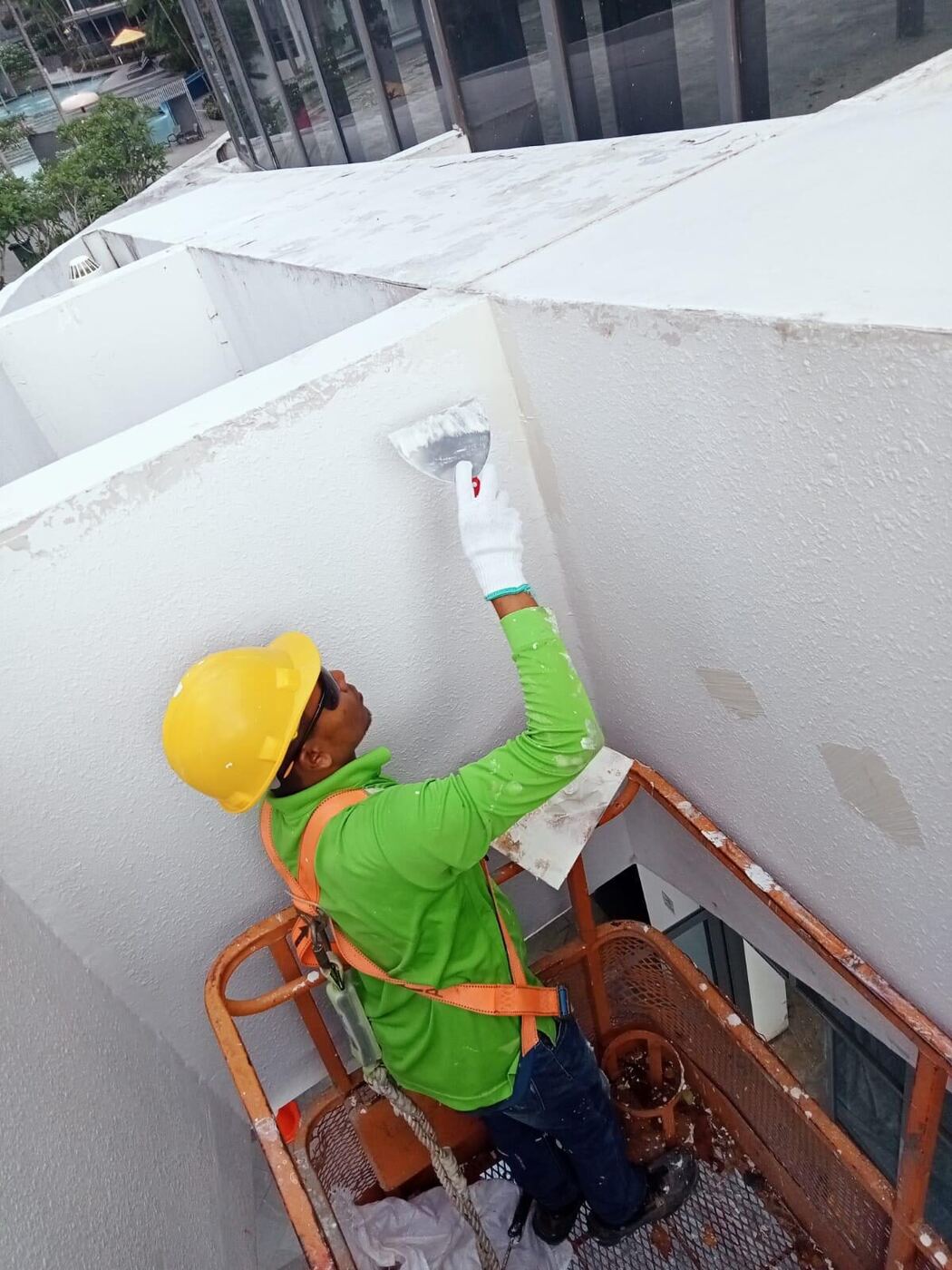
A Periodic Facade Inspection (PFI) report is the start of a rectification conversation, not the end of one. The inspection identifies defects; rectification fixes them. Statutory PFI is conducted by a Competent Person appointed by the building owner. For access and inspection-support enquiries, see facadeinspection.com.sg. This article looks at the next step: how a PFI report turns into actual crack repair and external wall waterproofing on the building.
What the PFI framework covers
Under the BCA Periodic Facade Inspection framework — see the BCA PFI regulations announcement — qualified inspectors examine the external facade for cracks, spalling, loose render, sealant joint failure, water staining and adhesion issues on cladding. The output is a report that grades defects and recommends action: monitoring, repair or further investigation.
From report to rectification scope
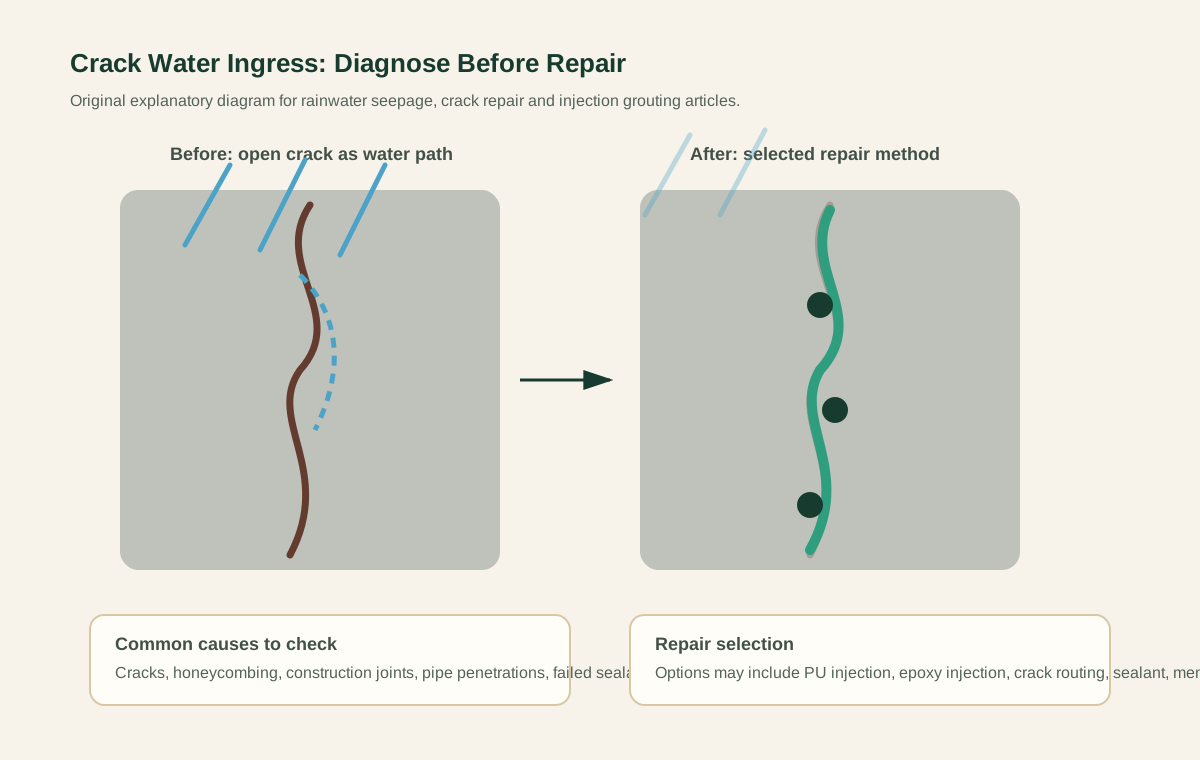
Rectification turns the report into a method statement. Each defect maps to a treatment: crack injection or surface seal, sealant joint replacement, render repair, spalling concrete repair, or area-wide external wall waterproofing where the wall is generally fatigued. Substrate condition is verified at access level before final material selection.
Access method follows the building, not the brochure
Boomlift access works on lower facades with good ground access. Gondola works on towers with a proper roof anchor and parapet condition. Rope access works where the building geometry is awkward or where ground space is limited. The chosen method is documented under the WSH Council Code of Practice for Working Safely at Heights and the MOM WAH amendment factsheet.
Material compatibility
Sealant grades, primers and topcoats have to be compatible with the existing finish. An elastomeric coating over a chalking acrylic paint will detach. A silicone sealant against a polyurethane coating is a common adhesion failure. Compatibility is checked on the building, not just on the data sheet, before the scope is closed.
Document trail for the building owner
- Annotated PFI report with location plans
- Method statement and risk assessment for the chosen access method
- Material data sheets and dry-film thickness records
- Photo record at access level before, during and after works
- Maintenance note covering re-coating intervals and joint inspection
PFI sits with the inspector. Rectification sits with the contractor.
Statutory PFI requires a Competent Person appointed by the building owner. Ezzogenics does not act as that appointed Competent Person. Crack repair, joint resealing and external wall waterproofing scopes that follow from a PFI report are documented here.