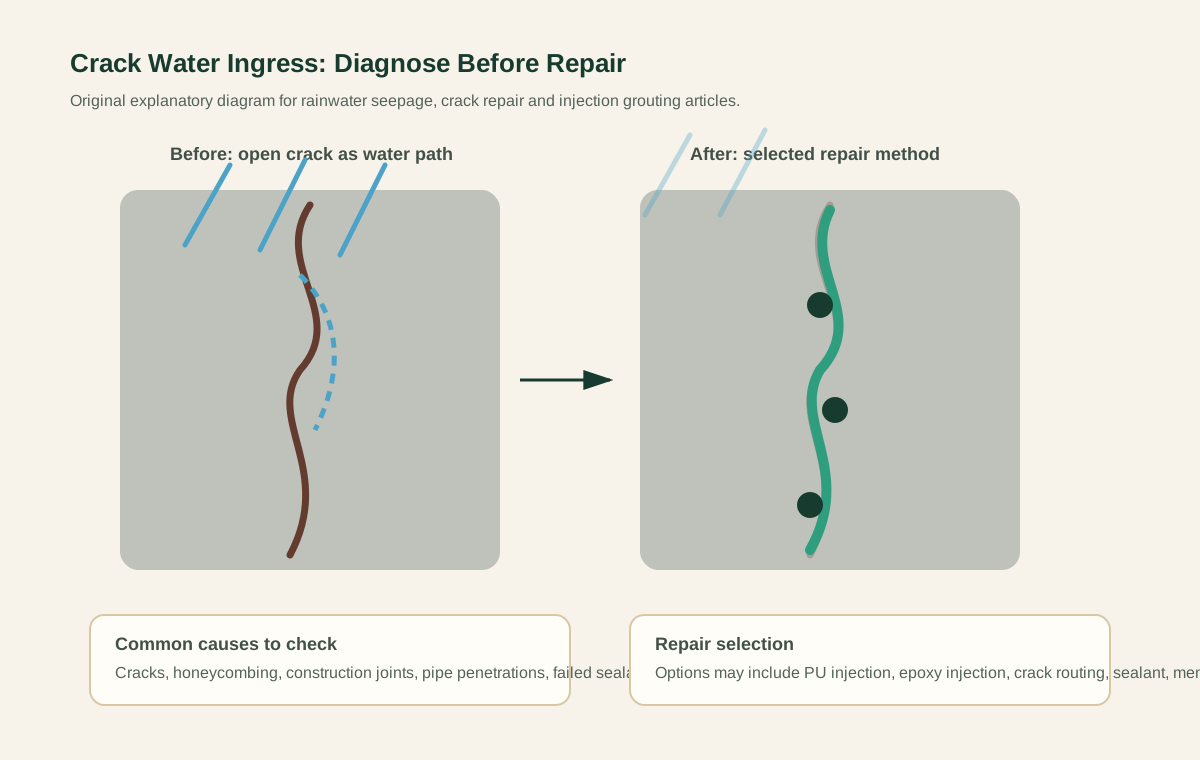
Good reinforced concrete leaks at the crack first. Uncracked concrete passes water slowly by capillary diffusion; cracked concrete passes water quickly by flow. A wall can have one wet patch and ten dry square metres around it — the wet patch is almost always at a crack or a joint.
Capillary diffusion through uncracked concrete
Even well-compacted concrete is porous. Water vapour and small volumes of liquid water can diffuse through the matrix over time, especially under sustained hydrostatic pressure. In an external wall or roof slab, this shows as background dampness on the inside face rather than a visible drip — and it responds to surface waterproofing or crystalline systems.
Flow through cracked concrete
Once a crack opens past about 0.1 to 0.2 mm, the transmission mode changes. Water now flows through the crack instead of diffusing through the matrix. The wet patch on the other side is sharply defined, often with efflorescence on the down-stream face. The seepage rate scales with the cube of the crack width — small width changes mean large flow changes.
Crack orientation and the leak path
Vertical cracks on an external wall collect rainwater and channel it downwards. Horizontal cracks at slab edges collect roof and parapet runoff. Diagonal cracks under windows track stress concentrations and often follow a leak path that crosses the wall before showing inside. The internal damp patch is rarely directly behind the external entry point.
Diagnosis before treatment
- Map the crack pattern on the external face
- Map the moisture pattern on the internal face
- Compare the two — the offset tells you the leak path
- Distinguish active from dormant cracks before specifying
- Check substrate condition around the crack for honeycombing or delamination
Treatment by crack type
Active, non-structural cracks: PU injection. Active, structural cracks: epoxy injection to rebond, plus PU where flow continues. Dormant hairlines: elastomeric overcoat sized to the substrate. General fatigue across a wall: full coating system with substrate repair, not just over-painting.
The framework for crack assessment and treatment selection in reinforced concrete buildings is in SS 637:2018. Treat the standard as the starting point; the actual treatment follows the diagnosis on the building.