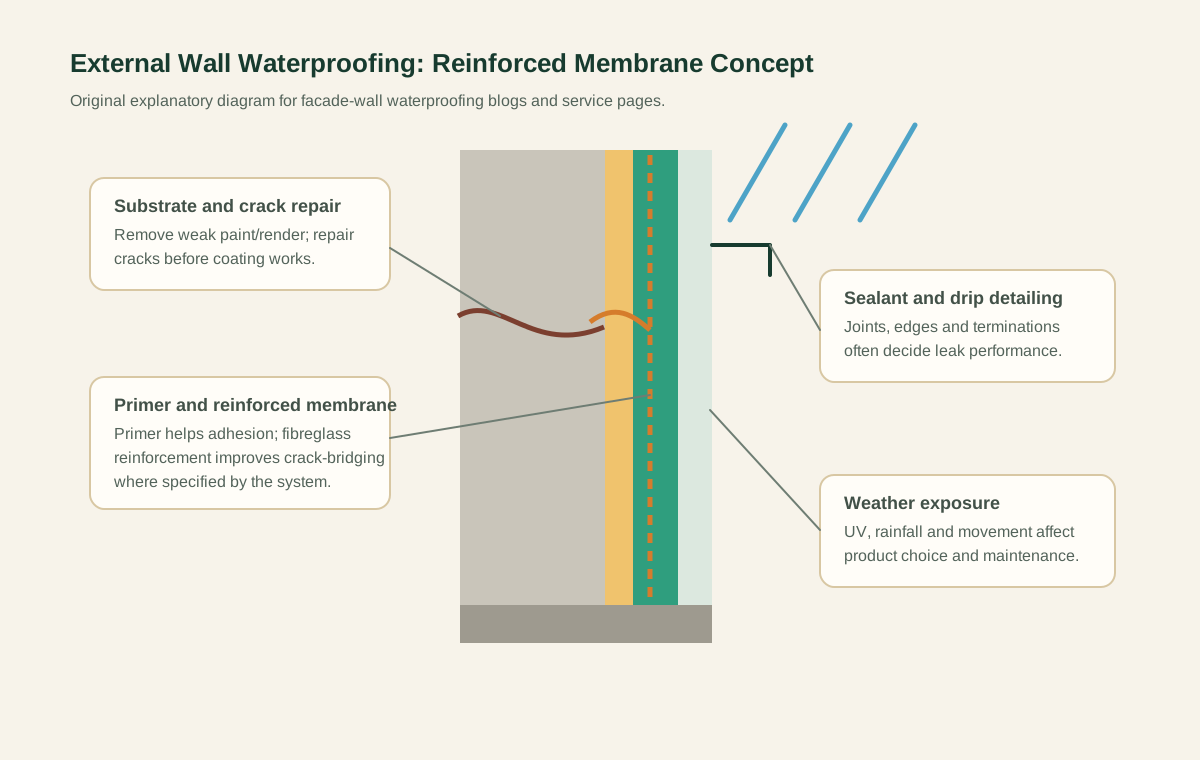
External wall waterproofing in Singapore is dominated by two material families — cementitious polymer-modified coatings and acrylic / elastomeric liquid coatings. They look similar on a tin lid; they behave very differently on a wall. The selection decision sits with the defect, the substrate and the access method, not the brochure.
Cementitious membranes — short summary
Cementitious polymer-modified membranes are factory-blended cement, fine aggregate and polymer. Mixed on site with water or a polymer liquid, applied in two coats at right angles, they bond to a mineral substrate and cure to a stiff, moisture-tolerant film. They are the default choice on rough plaster, RC slabs and below-grade tanking — surfaces that are mineral, mostly stable and not subject to large movement.
Acrylic and elastomeric membranes — short summary
Acrylic and elastomeric weatherproof coatings are water-based or solvent-based polymers that cure to a flexible, paint-like film. They tolerate hairline cracking and surface movement that would shear a cementitious film. They are the default choice on painted facades, smooth render and surfaces where a finished colour coat is part of the brief.
Selection by defect
- Hairline cracking on painted facade with light staining inside: elastomeric acrylic, single colour, full coat
- Cracked unpainted plaster with active seepage: PU injection at the crack, then cementitious overcoat or elastomeric topcoat
- New RC slab with planter loading: cementitious crystalline + protection layer; not acrylic
- Below-grade negative-side wall: cementitious tanking; acrylic is not a tanking material
- Old painted facade with chalking and movement at slab edges: elastomeric, with full removal of loose paint and joint resealing first
Substrate compatibility
Cementitious systems need a mineral, absorbent, slightly textured substrate. They will not bond to an oily, painted or glossy surface without aggressive preparation. Acrylic systems will bond to a wider range of substrates including aged paint, provided the existing paint is sound — but they are not a structural seal and will not bridge anything wider than a hairline crack on their own.
Movement tolerance
Movement is the difference. A cementitious film is rigid; once the substrate cracks, the film cracks with it. An elastomeric film can usually stretch across a moving hairline crack without rupturing, at least for a service life. Where the building moves more than a hairline — slab edges, expansion joints, precast joints — neither system is enough. The joint needs a movement-tolerant sealant in a properly sized joint, and the coating runs alongside it.
Standards and references
Singapore Standard SS 637:2018, Code of practice for waterproofing of reinforced concrete buildings, sets the framework for material classification, substrate preparation, application, testing and protection across both families. The BCA Waterproofing for Internal Wet Areas enhancement series is the parallel reference for wet-area work. For precast joint and weather-tightness detailing, SS 677:2021 is the applicable code.
Practical rule of thumb
Cementitious where the substrate is mineral and stable. Elastomeric where the wall moves a little and the colour finish matters. PU injection where the leak is active at a single crack. Use them in combination when the building demands it — the systems are complementary, not competing.